The Scientist’s Paradox: Why Asking is More Powerful Than Telling

As scientists, we are trained to be experts. From our earliest undergraduate days to the intense scrutiny of our doctoral defenses, we build a career on knowing things and, crucially, on telling others what we know. We publish papers to tell the world our findings. We present at conferences to tell our peers about our progress. We mentor students by telling them how to conduct their research. But what if I told you that our greatest strength as scientists might not be in the telling, but in the asking? This is the central, powerful idea behind Edgar H. Schein’s concept of “Humble Inquiry,” and it has profoundly reshaped my work in collaborative leadership.

Article content

What if I told you that our greatest strength as scientists might not be in the telling, but in the asking?

Humble Inquiry is the gentle art of asking questions to which you genuinely do not know the answer. It’s not about asking leading questions to guide someone to a conclusion you’ve already reached. It’s about momentarily setting aside your status as the expert and adopting a posture of pure curiosity. Think about the last time a junior researcher in your lab was struggling with an experiment. Was your first impulse to tell them what they did wrong and how to fix it? Or did you ask, “Can you walk me through your process? What did you observe that was unexpected?” The first approach solves an immediate problem; the second builds a thinking partner. Which one do you think fosters a more innovative and resilient research environment in the long run?

By telling, we create a hierarchy that can shut down the flow of vital information.

This shift from telling to asking is transformative in the highly interdependent world of modern science. No single person holds all the knowledge. Your collaborator in another department, the lab technician, or the graduate student running the assays, all have a unique perspective and hold critical pieces of the puzzle. By telling, we create a hierarchy that can shut down the flow of vital information. People become hesitant to point out a potential flaw in our reasoning or to share a “crazy” idea that might just lead to a breakthrough. How many potential discoveries are lost not because of a lack of knowledge, but because no one felt safe enough to ask a “dumb” question or challenge the expert in the room?

(Humble Inquiry) is about building relationships of trust where the best ideas, not just the ideas of the person with the most senior title, can rise to the surface.

I encourage you to experiment with Humble Inquiry this week. In your next lab meeting, instead of just reporting progress, try asking, “What’s one thing that’s puzzling us right now?” When mentoring a student, instead of giving immediate advice, ask, “What have you already tried, and what are you thinking of doing next?” This isn’t about abdicating your expertise; it’s about enhancing it with the collective intelligence of your team. It’s about building relationships of trust where the best ideas, not just the ideas of the person with the most senior title, can rise to the surface.

What’s one conversation you can have this week where you consciously choose to ask instead of tell, and what do you hope to discover?


Imposter Feelings: Friend or Foe in Science?

As scientists, we often find ourselves grappling with imposter feelings—those nagging thoughts that tell us we’re not good enough. It’s completely normal to experience these emotions, especially when stepping outside our comfort zones. However, managing these feelings is crucial to avoid slipping into the more damaging realm of imposter syndrome, which can lead to unhealthy behaviors such as procrastination, perfectionism, and burnout.

it’s common to compare our behind-the-scenes struggles to the polished successes of others, forgetting that we all have our setbacks.

Many of us have faced situations where we felt overshadowed by peers, only to realize later that everyone deals with their challenges. For instance, it’s common to compare our behind-the-scenes struggles to the polished successes of others, forgetting that we all have our setbacks. A personal anecdote: after congratulating a young scientist on a stellar presentation, I was met with, “But I was dying inside!” This highlights the reality that our perceived inadequacies often don’t reflect the reality of our peers’ experiences.

Transforming Imposter Feelings into Growth Opportunities

While imposter feelings can be uncomfortable, they can also serve as catalysts for growth. When we feel anxious, it may signal a need for development and an opportunity to plan how to tackle learning in our fields. We can cultivate resilience and motivation by re-framing these feelings as growth moments.

Practical Strategies to Combat Imposter Syndrome

1. Open Up About Experiences: Many scientists suffer in silence, equating the number of rejections with personal failure. Sharing our experiences, including the many grant rejections we’ve encountered, can be liberating and remind us that we’re not alone.

2. Celebrate Achievements: Regularly reflecting on and celebrating our successes—big and small—can counteract the innate negativity bias that often clouds our view of progress. This can include acknowledging a well-deserved paper publication or recognizing a colleague’s achievements.

3. Clear Communication: Articulating our work clearly helps demystify complex ideas and fosters an inclusive environment. We tend to assume others understand jargon, but simplifying our communication can bridge knowledge gaps.

4. Reject Dismissive Feedback: We must not let careless remarks from peers or reviewers define our self-worth. Recognizing these comments as reflections of others’ biases rather than objective truths about our abilities can significantly shift our mindset.

Imposter feelings are something many of us experience in academia. When we take the time to acknowledge and talk about these feelings, we open the door to significant personal and professional growth. Remember, you are not alone in this feeling—you’re on your own unique path of discovery and growth.

Bridging Communication Gaps in Scientific Teams

Recently, I participated in a collaborative research project that made me deeply reflect on the importance of effective communication in the scientific environment. I’d like to share some personal perspectives on how choosing the right communication channels and practicing active listening can significantly influence the success of our research and development initiatives.

Choosing the Appropriate Communication Channel

Up to 93% of interpersonal communication is influenced by non-verbal elements.

In the scientific world, we deal daily with complex information and nuances that are not always easily conveyed through written words. Non-verbal communication—gestures, facial expressions, and tone of voice—plays a crucial role in the complete understanding of the message. According to Albert Mehrabian, Professor Emeritus of Psychology at UCLA, up to 93% of interpersonal communication is influenced by non-verbal elements.

During the project I mentioned, we initially relied exclusively on emails to coordinate our activities. However, we noticed that misunderstandings were frequent, and the lack of nuances in written messages was causing delays. We then decided to implement weekly video conference meetings. This change allowed us to capture non-verbal cues, clarify doubts in real time, and strengthen relationships among team members.

Practicing Active Listening

Active listening is essential for building authentic and understanding relationships.

Active listening is a skill often underestimated but fundamental for effective communication. It involves not just hearing the interlocutor’s words but understanding the context, emotions, and intentions behind them. Carl Rogers, one of the pioneers of humanistic psychology, emphasized that active listening is essential for building authentic and understanding relationships.

In the research environment, where we collaborate with professionals from various areas and backgrounds, active listening allows us to integrate different perspectives and enrich our scientific approaches. It promotes trust and encourages contributions from all team members, resulting in more innovative and effective solutions.

Applying in Practice

To improve our communication, we can:

  • Choose the appropriate channel: For complex discussions or sensitive feedback, opt for face-to-face meetings or video conferences.
  • Practice active listening: Show genuine interest, avoid interruptions, and ask clarifying questions.
  • Be clear and concise: Ensure that the message is conveyed clearly, avoiding unnecessary jargon.

Effective communication is a fundamental pillar in scientific advancement. By choosing the appropriate channel and practicing active listening, we not only avoid misunderstandings but also foster a collaborative and innovative environment. I invite all fellow scientists in Brazil, the United States, and around the world to reflect on their communication practices and continuously seek to improve them.

Balancing Leadership in Research: What Drives Success?

As researchers, we’re constantly navigating the challenges of balancing the quest for new knowledge while refining what we already know. This dual focus—often referred to as ambidexterity—is crucial for the success of research groups. Recently, I came across a fascinating study that delves into how different leadership styles impact the ability of university research groups to achieve ambidexterity, with some compelling insights for those of us in academia.

The study titled “Leadership styles, collaborative integrative behavior, and ambidexterity in university research group” focuses on research groups in an emerging economy and sheds light on what types of leadership drive better results in our field. Let’s explore the main findings and discuss their implications for our work.

Transformational Leadership: A Path to Innovation

One of the key takeaways from the study is the positive influence of transformational leadership on research group ambidexterity. This leadership style is characterized by behaviors such as inspirational motivation, intellectual stimulation, and individualized consideration. In other words, leaders who actively inspire their teams, encourage creative problem-solving, and pay attention to each member’s unique needs tend to create environments where exploration (seeking new knowledge) and exploitation (refining existing knowledge) can thrive together.

Reflecting on our own experiences, how often do we see leaders in our institutions who actively foster a shared vision and motivate their teams toward long-term goals?

Transactional Leadership: Mixed Results

Interestingly, the study found that transactional leadership—focused on rewards and punishments—did not significantly influence ambidexterity. This finding challenges some traditional views that rewards can boost productivity and suggests that transactional behaviors might not provide the flexibility needed to foster innovative thinking. The results indicate that while transactional leadership might align team efforts toward short-term objectives, it may fall short in encouraging the creative exploration required for groundbreaking research.

Can we think of instances where reward-based approaches have helped or hindered our research progress? How might we balance recognizing achievements and fostering a culture of exploration?

Laissez-faire Leadership: The Value of Autonomy?

The laissez-faire leadership style, often characterized by a hands-off approach, also showed no significant effect on ambidexterity. This might seem surprising at first, but considering the autonomy many researchers possess, it makes sense that a lack of active leadership doesn’t strongly impact outcomes. The results suggest that experienced research teams can manage the balance between exploration and exploitation without needing constant guidance from leaders.

Would more autonomy benefit our own research, or do we thrive with more structured guidance? What factors might influence these preferences in different research settings?

The Role of Collaborative Behavior

Another critical finding was the positive impact of collaborative, integrative behavior on ambidexterity. Teams that support each other, share responsibilities, and work together closely can better integrate exploratory and exploitative activities. This suggests that fostering a culture of collaboration within research groups can be just as crucial as leadership style when it comes to driving ambidexterity.

How can we promote more collaborative behaviors in our teams, even when we face pressure to focus on individual achievements?

Cultural Considerations and Practical Implications

The study, conducted in Latin America, also reminds us of the cultural context in which our leadership practices unfold. In regions with high power distance and collectivist cultures, leadership behaviors might differ from those observed in other parts of the world. This means that what works in one setting may not translate directly to another, underscoring the need for context-sensitive leadership approaches.

For those of us in leadership positions, these findings suggest practical steps to consider. Developing transformational leadership skills, promoting collaborative practices, and being mindful of cultural dynamics can help create environments where research groups excel. As researchers, we might also think about advocating for policies that recognize collective achievements and foster collaborative innovation.

How do cultural norms in our own institutions influence leadership practices? Are there ways we can adapt leadership styles to fit our team’s cultural context better?

Moving Forward

This study provides valuable insights for those of us looking to lead or contribute more effectively to research groups. It challenges us to think about what leadership looks like in our settings and how we can create a balance that fosters both innovation and efficiency.

As we reflect on these findings, let’s keep the conversation going.

What leadership style do you feel resonates most with the dynamics of your research group?

Valuing All Voices in the Lab: Empowering Scientific Competence

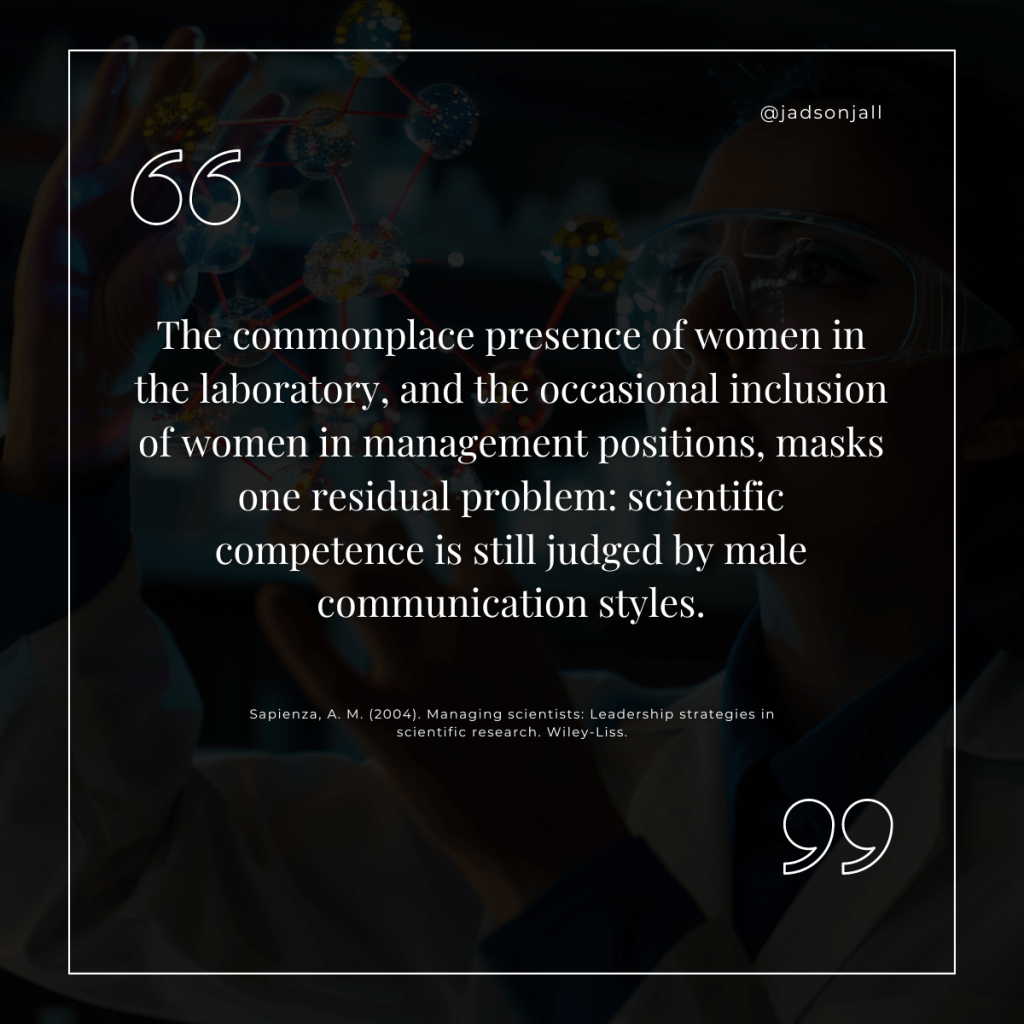
Ever felt like your scientific competence is judged by communication styles that don’t reflect who you are? Let’s discuss how we can value all voices in the lab, not just the traditionally dominant ones.

The Myth: Leadership Is All About Leaders

In the scientific study of leadership, one enduring myth continues to hold sway: the belief that leadership is all about leaders. This axiom posits that leadership is solely the domain of those in formal leadership positions, such as principal Investigators, presidents, or managers, while largely ignoring the crucial roles of followers and the dynamics within groups. Today, I want to dismantle this misconception and discuss why understanding followership is equally essential to grasp the full picture of effective leadership.

The Myth: Leadership Is All About Leaders

The traditional view of leadership focuses heavily on the traits, behaviors, and decisions of leaders themselves. This perspective suggests that by studying leaders in isolation, we can uncover the secrets to organizational success. However, this view is not just limited—it’s flawed. It overlooks the vital contributions of followers and the relational dynamics that make true leadership possible.

The Reality: Leadership Requires Followership

To understand why this myth is problematic, we must recognize that leadership is a relational process. It isn’t just about what leaders do; it’s also about how followers respond. Effective leadership is demonstrated through the actions, engagement, and reactions of followers. Without buy-in from followers, even the most charismatic leaders can fail.

One illustrative example comes from a study conducted in a scientific research unit. Initially, the focus was on the managerial leaders at the top. However, a deeper ethnographic study revealed that the true drivers of the unit’s success were the relatively junior scientists on the front lines. These junior scientists displayed emergent leadership by collaborating closely with their peers to solve real-time problems. Their followership of informal leaders within the group proved more crucial to the unit’s achievements than the distant directives from formal leaders.

Case Study: Leading from the Bench

Consider a high-performing R&D team at a leading pharmaceutical company. The official leader, Dr. Smith, was renowned for her academic credentials and strategic vision. Yet, day-to-day innovations often stemmed from Dr. Lee, a senior researcher without formal managerial authority. Dr. Lee had earned the respect and trust of her colleagues through years of collaboration and support.

When the team faced a complex challenge in developing a new drug, it wasn’t Dr. Smith’s strategic mandates that prompted a breakthrough, but rather Dr. Lee’s ability to galvanize her peers into a cohesive problem-solving unit. Her informal leadership—built on followership dynamics—was instrumental. When Dr. Lee suggested an unconventional approach, the team, motivated by their trust in her, executed it with commitment and precision, leading to a groundbreaking result. Meanwhile, Dr. Smith’s role, though still important, was to facilitate and support Dr. Lee’s emergent leadership from the background.

The Implications: Rethinking Leadership Studies

This case highlights the need for a shift in how we study and perceive leadership. Instead of focusing solely on leaders, we must examine the interactions between leaders and followers. We must recognize that leadership is a shared process, one that is deeply intertwined with the actions and support of followers.

By adopting a more holistic view, we can better understand the complexities of leadership and improve the way organizations harness the potential of all their members. Leaders in formal positions should strive to cultivate an environment where emergent leaders can thrive, recognizing that leadership is not about titles but about influence and collaboration.


The myth that leadership is all about leaders is a relic of an outdated perspective. Effective leadership is proved by followership—it’s a dynamic interplay between leaders and those they lead. By embracing this reality, we can foster more resilient, innovative, and successful organizations.

Subscribe to the Scientific Leadership newsletter on LinkedIn: Subscribe on LinkedIn

Visionary Leadership in Higher Education: Charting the Course for 2024 and Beyond

As 2024 unfolds, higher education stands at a crossroads, calling for visionary leaders who can navigate through its complexities and opportunities. These leaders are tasked with blending academic rigor and administrative acumen, creating a harmonious balance that drives institutions forward.

In this dynamic arena, adaptability and innovation are key.

Leaders must anticipate and respond to shifts in technology, demographics, and global trends, ensuring their institutions remain relevant and cutting-edge. This involves fostering an environment of continuous learning and growth, where new ideas are not just welcomed but actively sought.

The balancing act between academic and administrative responsibilities is a core challenge. Leaders in higher education must champion research and education while managing financial sustainability and regulatory demands. This dual role demands not only a deep understanding of the academic world but also strategic business insights.

Effective communication and collaboration are crucial.

Building robust networks within and outside their institutions, leaders must forge partnerships that enhance educational and research opportunities. Embracing diversity and inclusion, they create vibrant, multi-faceted communities where varied perspectives enrich the learning experience.

Preparing future leaders is an essential aspect of their role. Through mentoring and development programs, they ensure a pipeline of skilled individuals ready to take on leadership roles, maintaining the vitality and progression of the academic community.

Embracing technology is no longer optional but a necessity.

Leaders must integrate digital tools to enhance learning, streamline administrative processes, and expand their institution’s reach and impact. This tech-savvy approach is crucial for staying ahead in an increasingly digital world.

A global perspective is indispensable. Leaders need to understand and engage with international challenges and opportunities, ensuring their institutions are globally competitive and culturally inclusive. This broad view fosters international collaborations and positions their institutions as global education leaders.

Finally, ethical leadership forms the foundation of their role. Upholding integrity and ethical standards, leaders set a precedent for the entire academic community. This commitment to ethics ensures that their institutions not only achieve success but do so with a profound sense of responsibility and societal contribution.

As we venture into 2024, the call for visionary leadership in higher education is clear. It’s about shaping a future that aligns with the core values of education, innovation, and integrity. The leaders of today and tomorrow have the opportunity to make a lasting impact, not just within their institutions, but in shaping the minds and futures of generations to come.

The Challenges and Benefits of Being a Science-Agile Leader

In the fast-paced world of academic research and innovation, agility is not just a buzzword—it’s a survival strategy. Agile leadership in academia refers to the capacity of leaders—be it department heads, project managers, or principal investigators—to adapt quickly to change, foster collaboration, and drive innovation flexibly and responsively. This approach is particularly pertinent in the context of Industry-Academia Collaborations (IAC), where the dynamic interplay of knowledge and innovation across the two realms necessitates a leadership style that is both adaptive and integrative.

The essence of being agile in academia involves embracing a mindset that values iterative progress, encourages experimentation, and is open to learning from both successes and failures. Agile leaders in academia are those who can navigate the complexities of research and development with a vision that accommodates the evolving nature of scientific inquiry and the shifting landscapes of funding, collaboration, and technological advancement.

Challenges of Agile Leadership in Academia

The transition to agile leadership in academia has its challenges. Traditional academic structures often emphasize hierarchy and long-term planning, which can be at odds with the agile philosophy of flexibility and rapid iteration. Moreover, the differing objectives and incentives between academic research (which prioritizes generalizable knowledge creation) and industry (which seeks immediate practical solutions) can create friction.

For instance, the “Need for Speed” (N4S) program, a large-scale IAC initiative, highlights the importance of agile methodologies in fostering effective collaboration between industry and academia. The program faced challenges such as aligning the fast-paced, iterative nature of industry with the more deliberate pace of academic research. Additionally, the need for academics to be agile in response to industry needs while maintaining research rigor requires continuous reflection and adaptation.

Benefits of Agile Leadership in Academia

Despite these challenges, the benefits of agile leadership in academia are manifold. Agile leaders can drive more effective collaboration, as seen in the N4S program, where a digital knowledge repository called the “Treasure Chest” was created, containing over 100 actionable knowledge items, or “Gold Nuggets,” which facilitated the sharing of insights and tools between industry and academia.

Agile leadership also fosters a culture of continuous learning and improvement, which is essential for innovation. By adopting agile methodologies, such as Scrum or Kanban, academic leaders can manage projects more dynamically, allowing quicker pivots in response to new findings or external changes, such as shifts in funding or industry trends.

Moreover, agile leadership can enhance the impact of research by ensuring that it remains relevant to current challenges and by facilitating the translation of academic findings into practical applications. This not only increases the societal impact of academic work but also strengthens the ties between universities and industry, leading to more robust and sustainable collaborations.

Agile leadership in academia is a critical component for fostering innovation and enhancing research impact. By adopting agile principles, academic leaders can navigate the complexities of modern research and development, drive impactful collaborations, and create a culture conducive to continuous learning and adaptation. As academia continues to evolve, the principles of agile leadership will become increasingly integral to the success and relevance of research institutions.

Beyond the Lab: Transformative Leadership in Research and Innovation

In the continuously evolving landscape of scientific research, the role of leadership is paramount not just in charting the right course but also in fostering an environment that breeds innovation. Whether inside the hallowed halls of academia or in the dynamic setups of private labs, leaders face the challenge of not only keeping up with rapid advancements but also ensuring their teams are cohesive, motivated, and aligned with the mission at hand. The book “Move Fast and Fix Things: The Trusted Leader’s Guide to Solving Hard Problems” by Frances Frei and Anne Morriss offers quintessential strategies that, while written for a broad leadership audience, are profoundly applicable to the realm of research leadership.

1. Identifying the Real Problem: The first step towards impactful research is understanding the core problem. In the scientific community, this translates into thorough literature reviews, recognizing gaps in the current body of knowledge, and identifying meaningful, high-impact research questions. Leaders should cultivate a culture of deep inquiry and critical thinking, encouraging teams to look beyond the obvious and question the status quo. It’s about recognizing that the most apparent issue might be a symptom of a more profound, underlying problem in research methodology, funding allocation, or thematic focus.

2. Building Trust with Stakeholders: In research, stakeholders range from team members, institutional leaders, to funding bodies, and the wider academic community. Establishing trust involves transparent communication, ethical research practices, and consistent delivery of quality work. Research leaders must also advocate for their teams, securing necessary resources, and defending the integrity and relevance of their work. Building trust internally also means crediting team members for their contributions and creating a psychologically safe environment where open dialogue, especially concerning failures and uncertainties, is encouraged.

3. Creating Inclusive Conditions: Diversity in research isn’t just an ideal; it’s a catalyst for innovation. Leaders should strive for diverse team compositions, not just in demographics but also in academic backgrounds and thought processes. Encouraging interdisciplinary collaboration can lead to breakthrough innovations, as complex problems often require multifaceted solutions that a homogenous group might miss. Additionally, inclusive conditions mean accommodating different working methodologies and understanding individual needs, thereby maximizing each team member’s potential contribution.

4. Telling a Compelling Story: A narrative is a powerful tool, even in the data-driven world of research. Leaders must master the art of storytelling to secure funding, engage the public, and inspire their teams. This involves translating complex data into compelling narratives that highlight the significance and potential impact of their work. Whether pitching for a grant or publishing a paper, an engaging narrative can differentiate a project in a sea of competitors, attracting both resources and talent.

5. Executing with Urgency: In a field where the landscape is continuously evolving, a sense of urgency is critical. However, this shouldn’t be confused with haste that compromises quality. Instead, leaders must create efficient workflows, prioritize tasks, and set clear, achievable goals. Implementing agile methodologies can help maintain progress and adapt quickly to new information or changes in the research environment. Importantly, urgency should be coupled with patience, recognizing that groundbreaking research is often a marathon, not a sprint.

By integrating these strategies, leaders in science can foster research teams that are not only efficient but also innovative, resilient, and deeply engaged in their work. Whether in academia or private sectors, the principles of quick, thoughtful action, trust, inclusivity, compelling storytelling, and urgency can set the stage for breakthrough discoveries and advancements that extend far beyond laboratory walls. In the race towards innovation, the leaders who move fast and fix things are the ones who’ll shape the future of research and, indeed, the world.

Why Must Researchers Develop Leadership Skills?

Are you a researcher excelling in your field but still feel like something’s missing? The answer may lie in a skill set often overlooked in scientific disciplines—leadership development.
My latest video sheds light on why and how researchers can benefit from honing leadership skills.

📣 Be a Leader, Share the Knowledge! 📣

Did you gain valuable insights from my video on the importance of leadership skills for researchers? Take the next step in your leadership journey by sharing this valuable resource with others!

Let’s work together to advance the future of collaborative research.